
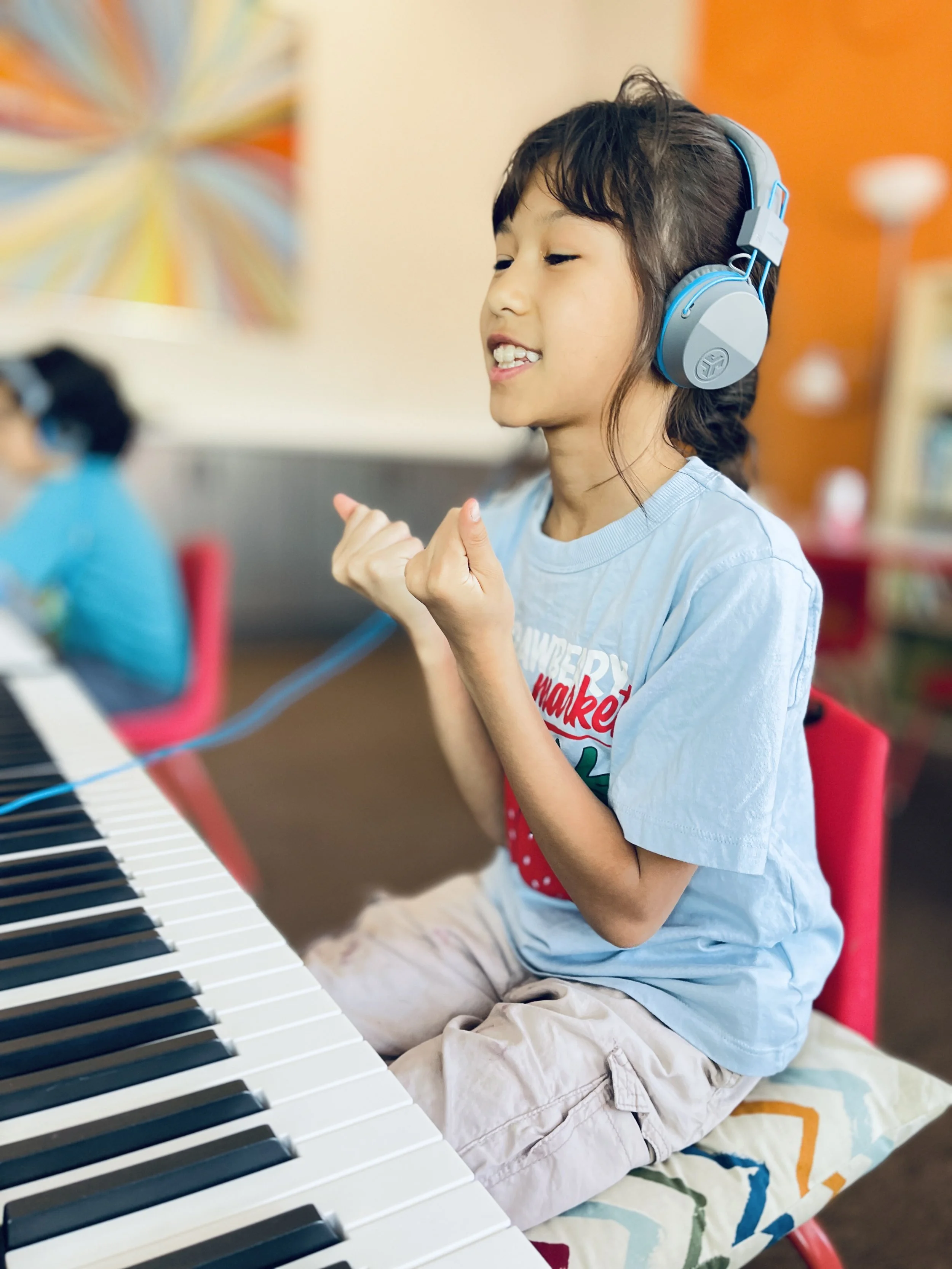
Let the piano become part of ordinary life
Some children ask for piano lessons out of nowhere.
They hear a song in a movie, see someone playing at a restaurant, notice a keyboard in a friend’s house, or fall in love with a piece of music before they even know what the instrument is called.
Other children need a little invitation.
Not pressure. Not a lecture about how music is good for the brain. Not a promise that piano lessons will help with math.
Just a spark.
One of the loveliest things a parent can do before a child begins piano lessons is to make the piano feel like something that belongs in ordinary life. Not a test. Not a chore. Not one more weekly activity to perform correctly.
Just something interesting. Something beautiful. Something worth wandering toward.
Start with listening
Before a child plays the piano, they can fall in love with the sound of it.
Put on piano music while you make breakfast. Play a movie soundtrack in the car. Let your child hear jazz, classical music, video game music, musical theater, ragtime, and silly little beginner songs.
Children do not need to know the composer’s name to have a real musical experience. They can simply say:
“I like that one.”
“That sounds like running.”
“That sounds spooky.”
“That sounds like water.”
That is already musicianship.
Let them explore sound
If you have a piano or keyboard at home, invite your child to experiment without correcting them right away.
Can they make the piano sound like rain?
Can they play something that sounds like a giant walking?
Can they find the lowest note?
Can they find the highest note?
Can they make up a song for the family dog?
This kind of play matters. It teaches children that music is not only something printed on a page. Music is sound, imagination, pattern, motion, and feeling.
That is where real musical curiosity begins.
Use technology on purpose
I am not anti-screen.
In fact, some of the most joyful music exploration can happen when technology is used creatively and intentionally.
GarageBand on an iPad can be a wonderful way for children to experiment with sound, rhythm, recording, and musical layering. They can build a little drum pattern, try different keyboard sounds, record a melody, or make a tiny soundtrack for a story they invented.
That kind of creative play helps children understand that music is something they can shape.
The goal is not to replace piano lessons with an app. The goal is to let a child discover, “Oh! I can make music.”
That feeling is powerful.
Read stories about music
Books can also open the door.
A beautiful music storybook can help a child imagine themselves as someone who plays. Not because they are being pushed into lessons, but because they see music as part of a larger world of creativity, courage, practice, and wonder.
For younger children, picture books about composers, instruments, and musical adventures can be perfect.
For older children, a magical or mystery-based music novel can make the whole idea of music feel enchanted. A book like The Mystwick School of Musicraft is especially fun for kids who like fantasy, magic, and adventure — and might not yet realize that music itself already has a little magic in it.
Keep it light
The fastest way to crush curiosity is to turn every spark into an assignment.
If your child shows interest, you do not have to immediately say, “Great! Now practice for twenty minutes.”
You can simply say:
“That was beautiful.”
“Show me what you found.”
“Do you want to hear another piano song?”
“Should we make up a song together?”
Curiosity grows best when it has room to breathe.
When lessons begin
A good first piano experience should help children feel capable, creative, and curious.
Of course, they will learn notes. They will learn rhythm. They will learn technique. They will learn how to read music and how to practice.
But underneath all of that, the real goal is bigger:
A child should begin to feel at home in music.
That is why, at Obbligato Music, we care so much about joyful progress. Piano lessons should be structured, yes. But they should also feel alive. Children should get to listen, explore, create, move, laugh, try again, and discover that music is not just something they are supposed to get right.
It is something they get to belong to.
A few favorite tools for music exploration at home
Disclosure: This post may contain affiliate links. As an Amazon Associate I earn from qualifying purchases. I only share resources that I genuinely think may be helpful for musical families.
If your child is curious about piano, a few simple tools can make musical play easier:
a beginner-friendly keyboard or digital piano
child-sized headphones
an iPad with GarageBand
a music storybook
stickers or small rewards for creative music time