• Music is Necessary: Notes from a Modern Atelier
  • Welcome!
  • Members Lounge
  • Piano Recommendations
  • Testimonials
  • Locations
  • Calendar
  • Free

Obbligato Music Obbligato Music

  • Music is Necessary: Notes from a Modern Atelier
  • Welcome!
  • Members Lounge
  • Piano Recommendations
  • Testimonials
  • Locations
  • Calendar
  • Free

Is Your Child Ready for Piano Lessons?

5 Signs to Look For

If you are searching for piano lessons for kids in Arlington, VA, you may be wondering whether your child is ready to begin.

Perhaps they are fascinated by the piano. Maybe they tap rhythms on the table, sing constantly, or ask to try an instrument. Or perhaps you are concerned that lessons might be too structured, too difficult, or simply too much for their age.

The good news is that readiness is not about finding a “perfect” age. It is about noticing whether your child is beginning to show the curiosity, focus, coordination, and confidence needed to enjoy a musical beginning.

At Obbligato Music, our Piano Playground program is designed to make that beginning feel welcoming. Children learn in fun, play-centered 30-minute semi-private sessions with up to four students. Each child receives individual attention while also enjoying the encouragement of learning alongside peers.

Here are five signs that your child may be ready for piano lessons in Arlington.

1. Your Child Shows Genuine Interest in Music

The most encouraging sign is simple: your child wants to explore music.

Readiness might look like:

  • Asking questions about the piano

  • Wanting to press keys and make sounds

  • Singing or humming familiar songs

  • Tapping rhythms on tables, toys, or their knees

  • Watching closely when someone else plays

  • Asking when they can take lessons

Your child does not need to express a formal desire to “study piano.” Young children may show interest through play, movement, imitation, or repeated curiosity.

You can gently explore that interest at home by asking, “Would you like to learn how to play some songs on the piano?” Pay attention to their response over time. A passing curiosity is perfectly natural, but sustained interest is a wonderful foundation for lessons.

At this stage, curiosity matters more than talent. Your child does not need to know how to read music or demonstrate perfect rhythm before beginning. They simply need an opening through which a teacher can help their interest grow.

2. They Can Stay Engaged With an Activity

A beginning piano lesson does not require a child to sit completely still or concentrate without moving. Young learners need variety, movement, and opportunities to reset their attention.

However, it helps if your child can stay engaged with a guided activity for a short period of time.

This might include:

  • Listening to a story

  • Completing a puzzle

  • Building with blocks

  • Drawing or coloring

  • Playing a simple game

  • Following along with a craft or classroom activity

If your child can participate in one of these activities for approximately 10 to 15 minutes, with reasonable support, they may be ready to try a 30-minute lesson. They do not need perfect focus. Brief movement, questions, and pauses are all part of learning at this age.

In a well-designed beginner lesson, attention is supported through changing activities. A child may listen, play, move, observe another student, and return to the keyboard. This is one reason a play-centered format can be such a positive fit.

3. They Are Beginning to Follow Simple Directions

Piano lessons involve listening and responding. A child may be asked to place a hand in a certain position, play one key, wait for a turn, or repeat a short pattern.

Your child may be ready if they can usually:

  • Follow a one- or two-step direction

  • Imitate a simple clapping pattern

  • Take turns during a game

  • Listen while another person is speaking

  • Try an activity after watching a demonstration

They do not need to follow every direction perfectly. Readiness is not the same as compliance, and children are still developing their independence. What matters is whether they can participate in a shared learning experience with gentle guidance.

Semi-private lessons can make this process feel more natural. Children learn not only from their teacher, but also by observing peers. They begin to see how other students listen, try, make mistakes, and try again.

4. They Are Developing Fine-Motor Coordination

Playing the piano asks children to coordinate their eyes, hands, fingers, and ears. These skills develop gradually, and no child needs advanced finger independence before beginning.

Still, some everyday activities can give you a sense of your child’s developing coordination:

  • Holding crayons or pencils

  • Building with small blocks

  • Using child-safe scissors

  • Buttoning clothing

  • Completing simple puzzles

  • Tapping individual fingers on a table

  • Pressing one piano key at a time

If your child is still developing these skills, that does not necessarily mean they should wait. Music lessons can become another playful way to strengthen coordination. A thoughtful teacher will adapt activities to the child in front of them rather than expecting every beginner to arrive with the same abilities.

The goal is not to test your child before lessons. It is to give them a supportive environment where coordination can develop alongside musical understanding.

5. They Can Experience a Small Challenge and Try Again

Learning piano includes many small discoveries: and small frustrations. A child may press the wrong key, forget a pattern, or find that a new skill takes several attempts.

One important sign of readiness is the ability to experience a manageable challenge with support.

Your child may be ready if they can sometimes:

  • Try a puzzle that is not immediately easy

  • Accept a gentle correction

  • Repeat an activity after making a mistake

  • Ask for help instead of giving up immediately

  • Celebrate a small improvement

  • Return to a challenge after taking a brief break

This does not mean your child must calmly welcome every mistake. Young children are still learning how to manage frustration. The right teacher and the right learning environment can help them build that capacity over time.

At home, practice should remain short, positive, and consistent. A few focused minutes can be more helpful than a long session that ends in stress. Parents of young beginners often provide support by helping establish a routine, celebrating effort, and keeping expectations realistic.

Piano lessons should build confidence: not turn music into a daily power struggle.

Is My Child Too Young for Piano Lessons?

This is one of the most common questions parents ask, and the answer depends on the child.

Many children begin formal piano instruction around age five, when attention, coordination, language, and social learning are beginning to come together more consistently. Some children are ready later, and some may be ready earlier for an introductory musical experience.

A child who starts at six, seven, or eight is not behind. Older beginners may bring stronger reading skills, longer attention spans, and greater independence. Piano is not a race. The most important goal is to begin in a way that supports a lasting relationship with music.

If your child is not ready yet, you can continue nurturing their interest through:

  • Singing together

  • Clapping and copying rhythms

  • Listening to a variety of music

  • Exploring a keyboard without pressure

  • Reading books about musicians and instruments

  • Playing movement and listening games

Readiness can change quickly during the early childhood years. A child who needs more time now may be enthusiastic and prepared a few months later.

Why Piano Playground Works for Young Beginners

Piano Playground is designed for children who are beginning their musical journey and benefit from both personal attention and a sense of community.

Each session is:

  • 30 minutes

  • Semi-private

  • Limited to up to four students

  • Structured around fun, play, and real music skills

  • Designed to build confidence and joyful progress

  • Available through a $125 monthly membership

Children work at the piano while learning alongside peers. They hear other students play, practice taking turns, and discover that everyone progresses in their own way. The setting offers the individual guidance of a focused lesson without making a young beginner feel isolated or under a spotlight.

You can learn more about our approach in our guide to semi-private piano lessons or explore our broader piano lessons in Arlington, VA.

Begin With Curiosity, Confidence, and Joy

Your child does not need to arrive knowing exactly what they want from piano. They do not need to be naturally gifted, highly disciplined, or able to sit perfectly still.

They need a welcoming first experience.

The right beginning can help your child develop real musical skills, build confidence through small successes, and discover the joy of making something expressive with their own hands. From a first note to a favorite song, piano can become a meaningful part of their growth.

If you are wondering whether your child is ready for piano lessons in Arlington, VA, we invite you to schedule a complimentary introductory session with Obbligato Music. Tell us a little about your child, their interests, and your goals. We will help you explore whether Piano Playground is the right fit.

Schedule a complimentary session with Obbligato Music and take the next step toward a joyful musical beginning.
September 9, 2026 by Jessica Cain.
  • September 9, 2026
  • Jessica Cain
  • Post a comment
Comment

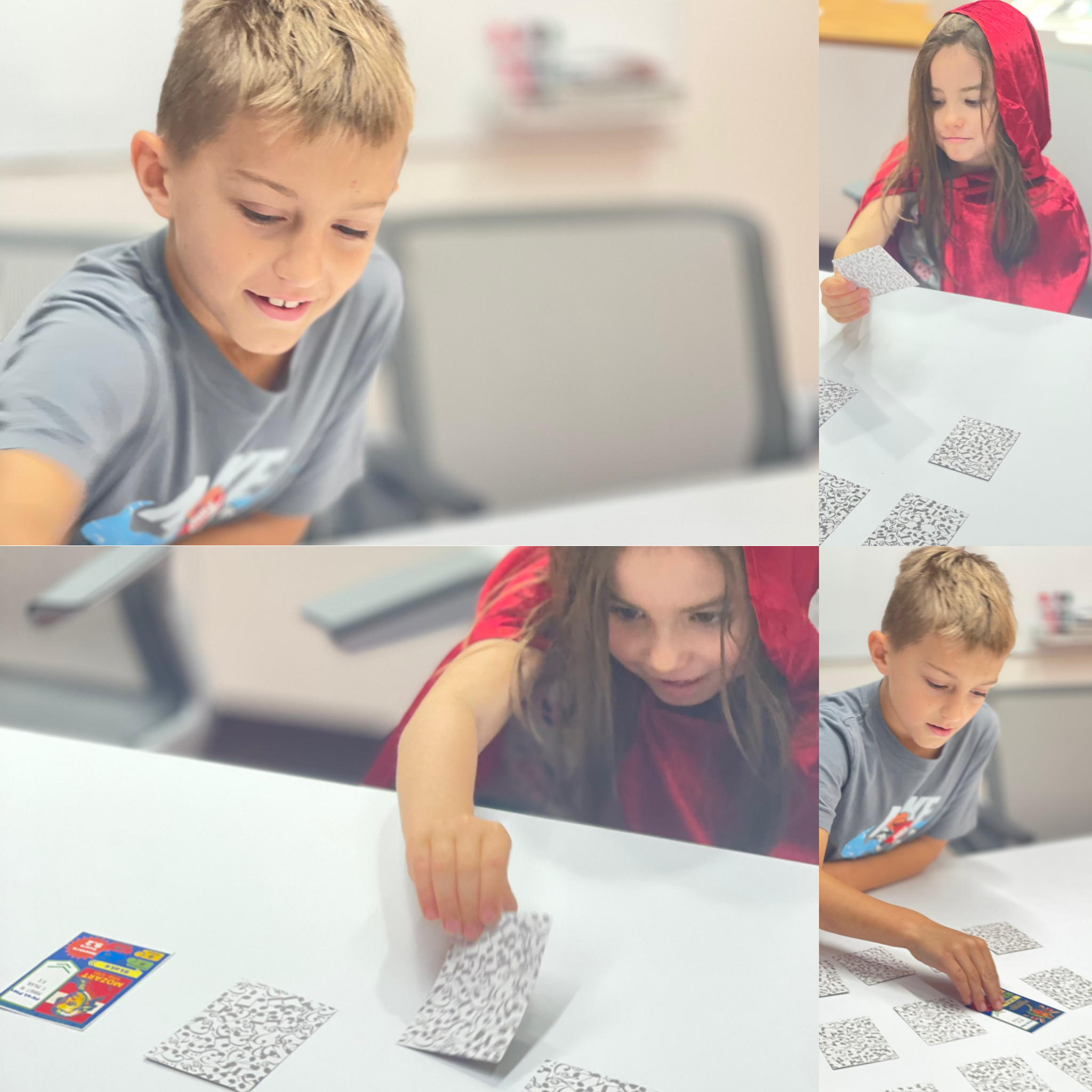
Getting started by playing a round of Maestro Match

How to Choose the Best Piano Teacher for Your Child in Arlington, VA

Getting started by playing a round of Maestro Match

Getting the Right Fit

Choosing a piano teacher for your child is about more than finding someone who can play well. You are looking for a teacher who can help your child feel comfortable, build real skills, stay curious, and experience the satisfaction of making music.

The best piano teacher for your child will be a thoughtful match for their **age, personality, learning style, goals, and attention span**. A young beginner may thrive with play-centered activities and encouragement, while an older or more experienced student may be ready for a more structured, focused approach.

If you are searching for children’s piano lessons or a piano teacher in Arlington, VA, here are the most important qualities to consider.

Begin With Your Child’s Needs

Before comparing teachers, take a moment to think about what your child needs from the experience.

**Is your child brand new to music?** They may benefit from short, varied activities that make the piano feel approachable.

**Does your child enjoy learning alongside friends?** A small group can provide motivation, shared energy, and a sense of belonging.

**Does your child already play another instrument?** They may be ready for more individualized repertoire, technical guidance, or performance goals.

**Is your child returning after time away?** Look for a teacher who can welcome them back without making them feel behind.

There is no single correct reason to begin piano lessons. Your child might want to play favorite songs, explore sounds, perform for family, prepare for an assessment, or simply discover a new creative outlet.

The right teacher will listen to those goals and help shape a musical path that feels both encouraging and meaningful.

Look for Experience Teaching Children

Being an accomplished pianist and being an effective children’s piano teacher are not always the same thing.

Teaching young students requires patience, flexibility, clear communication, and an understanding of how children develop attention and confidence. A strong teacher knows when to introduce a new skill, when to change activities, and when to celebrate a small success.

When speaking with a prospective piano teacher, ask:

- Which ages do you regularly teach?

- What does a typical beginner lesson look like?

- How do you keep children engaged?

- How do you respond when a child feels frustrated?

- How do you communicate progress with parents?

- What kind of practice is realistic for a child’s age?

You want your child to receive more than information. They should feel seen, supported, and capable of learning.

At Obbligato Music, we have been serving developing pianists since 2003. Our approach connects musical progress with confidence, enjoyment, expression, and the opportunity to build a lasting relationship with music.

Consider the Lesson Format Carefully

The format of piano lessons can make a major difference in your child’s experience.

Private lessons offer one-on-one attention and can be especially useful for students with specific goals or more advanced needs. Group lessons can create a social learning environment, but some group settings may not provide enough individual attention.

A semi-private lesson offers a thoughtful middle ground.

**Piano Playground: Play, Progress, and Belonging**

**Piano Playground** is designed for children who enjoy learning through play, interaction, and encouragement. Sessions are **30 minutes** and accommodate up to **four students**, allowing each child to receive individual attention while learning alongside peers.

Children can watch one another try new skills, celebrate progress together, and experience the piano as something joyful and social: not a solitary task.

The program focuses on:

- **Confidence-building**

- **Real music skills**

- **Individual attention**

- **Peer motivation**

- **Joyful progress**

- **A lasting love of music**

Piano Playground membership is **$125 per month**.

For many families, this format offers a practical and encouraging first step. Children get the structure of a regular lesson without feeling that every moment depends on performing perfectly by themselves.

You can also read more about [how semi-private piano lessons combine individual attention with group motivation](https://www.obbligatomusic.com/blog/semi-private-piano-lessons).

Pay Attention to the Teacher’s Approach

Ask yourself how the teacher talks about learning.

Does the teacher focus only on mistakes and correctness? Or do they help children understand that mistakes are part of discovery?

A child-friendly piano teacher should be able to balance warmth with clear expectations. Lessons should be fun, but “fun” does not mean unstructured. Children can learn rhythm, music reading, coordination, listening, and musical expression while still feeling relaxed and engaged.

Look for a teacher who:

- Explains ideas in language your child can understand

- Uses different activities to maintain focus

- Makes room for creativity and musical choice

- Adjusts the pace when your child needs more time

- Offers clear next steps

- Recognizes effort as well as results

- Helps your child feel proud of genuine progress

The goal is not simply to get through a method book. The goal is to help your child become increasingly confident and independent at the piano.

Ask About Practice Expectations

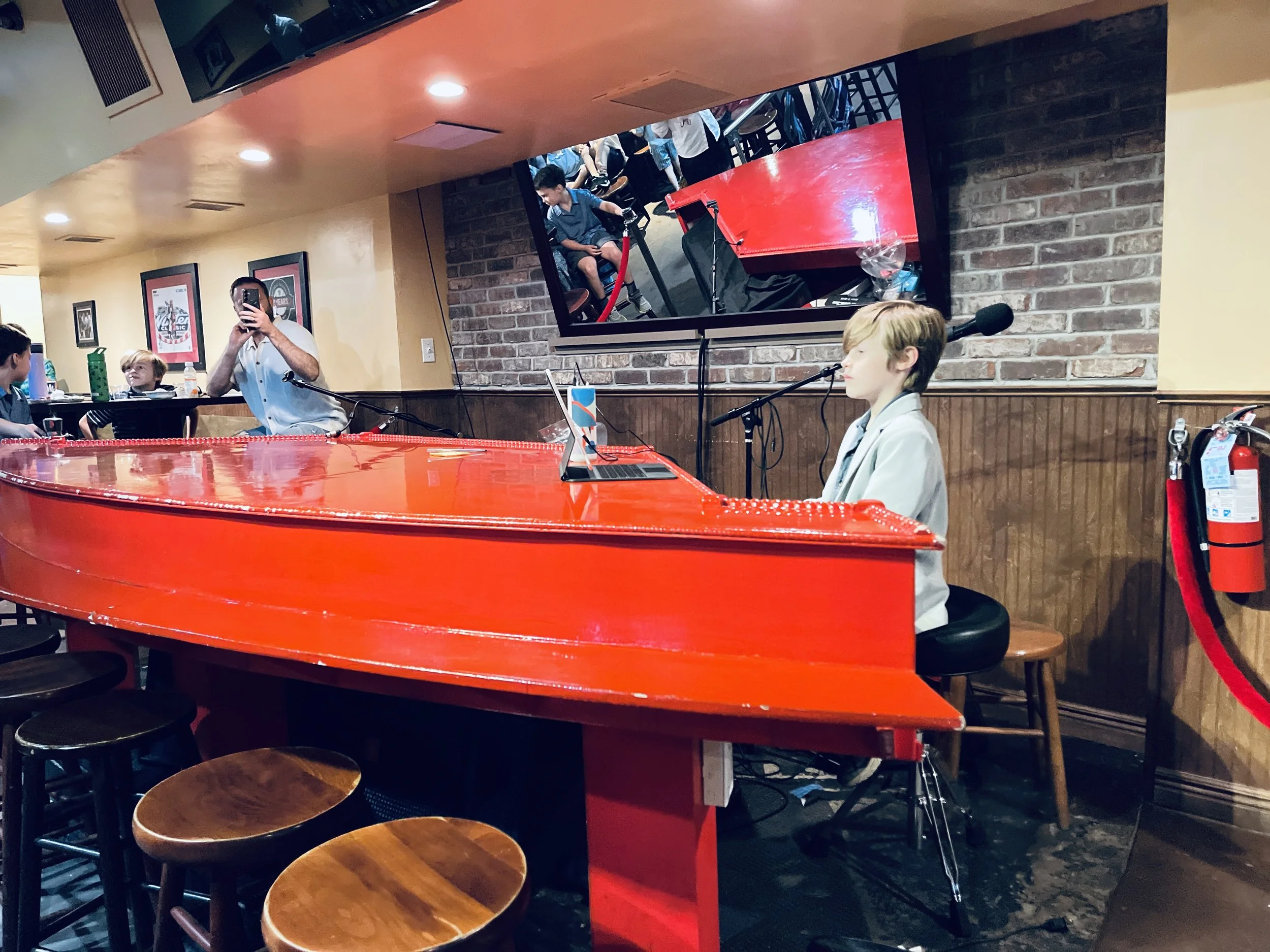
Playing like a star at the Georgetown Piano Bar

Practice is an important part of learning piano, but expectations should be appropriate for your child’s age and experience.

For a young beginner, short and consistent practice may be more productive than an ambitious routine that quickly becomes stressful. A good teacher can help your family understand what to practice, how long to practice, and how to make practice feel manageable.

Ask:

- How often should my child practice?

- How long should each practice session be?

- What should we do if practice becomes difficult?

- How will my child know what to work on?

- What role should parents play?

Parents do not need to become piano teachers. Your role is usually to help create a supportive routine, provide encouragement, and notice your child’s effort.

When practice connects to something your child wants to play or accomplish, it becomes easier to sustain. Over time, regular practice helps children develop not only musical skills but also patience, focus, and the confidence that comes from continuing when something feels challenging.

Observe Your Child’s Response

A complimentary introductory session or trial lesson can help you understand whether a teacher and program are a good fit.

During the session, notice:

- Does the teacher make your child feel welcome?

- Does your child have an opportunity to participate quickly?

- Are instructions clear and encouraging?

- Does the lesson include variety?

- Does your child experience a small success?

- Are you given a clear explanation of what comes next?

- Does your child leave curious to return?

Your child does not need to perform perfectly during an introductory session. In fact, a first lesson is often about discovering how they respond to the piano and to the learning environment.

The most important question may be simple: **Does your child seem comfortable, engaged, and interested in coming back?**

Choose a Studio That Can Grow With Your Child

Your child’s needs may change over time. A good music studio should offer a path that can develop with them.

At Obbligato Music, **Piano Playground** is designed for young children who are beginning their musical journey. As students grow, they may continue exploring piano through different forms of instruction and increasingly independent preparation.

Our programs also include:

- **Key Club:** Relaxed, social 60-minute piano sessions for adults, beginners, hobbyists, returning pianists, and lifelong learners.

- **Principal Studio:** Auditioned private instruction for intermediate and advanced students who are ready for focused study, consistent practice, individualized repertoire planning, and detailed coaching.

That range matters because music is not a one-time activity. Your child may begin with play, build confidence through regular lessons, discover personal musical interests, and eventually pursue more focused goals.

From a first rhythm pattern to a meaningful performance, the journey can continue at the right pace.

Why Arlington Families Choose Obbligato Music

Families searching for a piano teacher in Arlington, VA often want several things at once: professional instruction, a welcoming atmosphere, practical scheduling, and a program that respects their child’s individuality.

Obbligato Music brings those priorities together through:

- **Play-centered piano lessons for children**

- **Semi-private sessions with individual attention**

- **A welcoming environment for beginners**

- **Instruction for different ages and levels**

- **Opportunities to build confidence and expression**

- **A clear path from first lessons to deeper study**

- **More than two decades serving developing pianists**

Parents are welcome to observe lessons from our observation space, or they can give their children a little independence by dropping them off. You can learn more about the studio and service area on our [locations page](https://www.obbligatomusic.com/locations).

Begin With a Complimentary Introductory Session

You do not have to decide everything before meeting us.

Tell us a little about your child, their experience, and what they hope to explore. We will help you consider whether Piano Playground is the right fit and explain what the next step could look like.

We currently have openings for children in **Piano Playground**, our 30-minute semi-private program in Arlington.

[Schedule a complimentary introductory session](https://www.obbligatomusic.com/complimentarysession) and discover a welcoming first step toward piano lessons your child can enjoy.

From the first note to years of joyful progress, we look forward to welcoming your family to Obbligato Music.

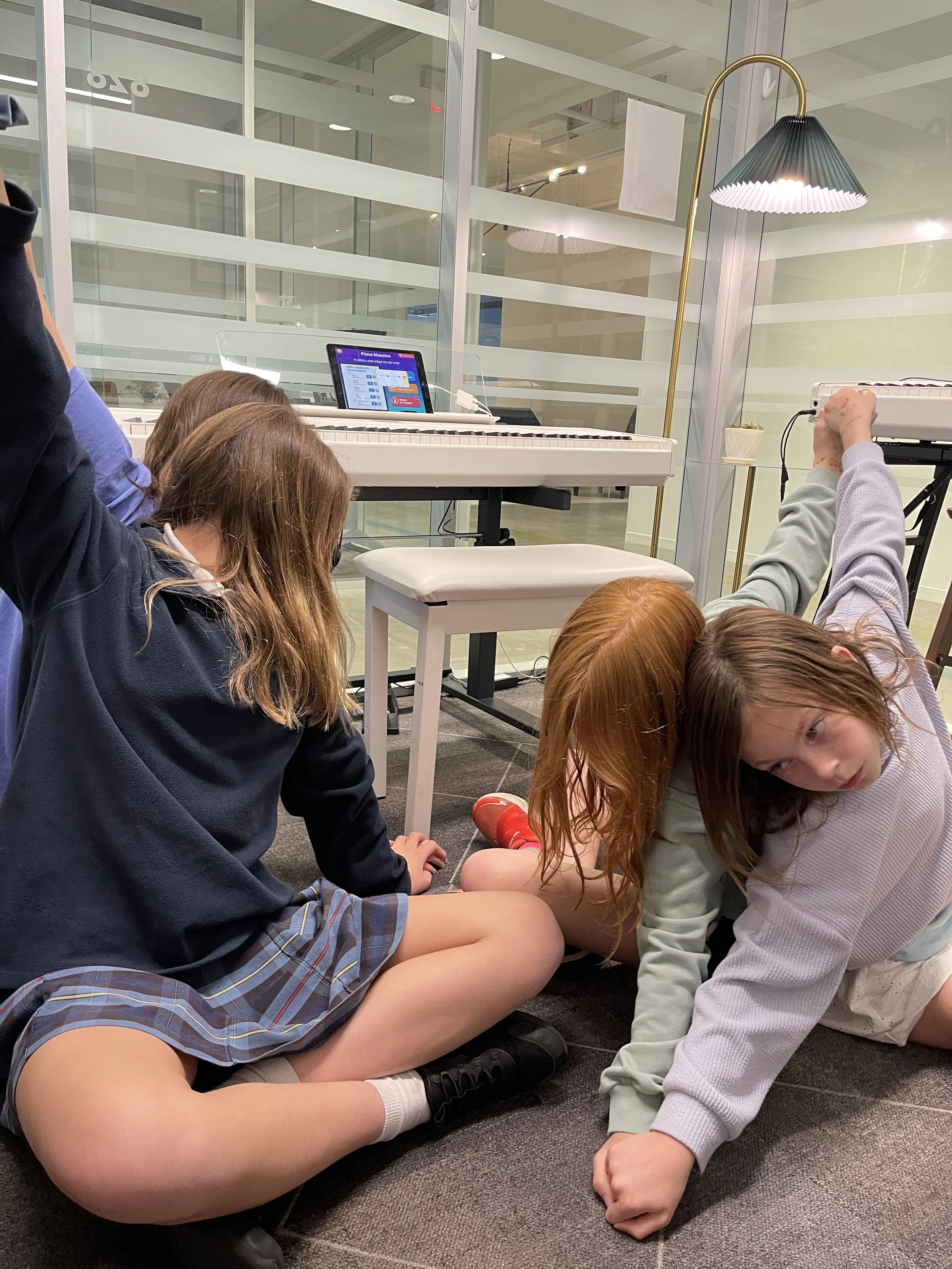
Exploring Spinal Balance before arriving at the bench

September 4, 2026 by Jessica Cain.
  • September 4, 2026
  • Jessica Cain
  • Post a comment
Comment

How Piano Lessons Help Children Keep Going When Something Feels Hard

Piano lessons give children a safe place to encounter something difficult, try a new strategy, and keep going. In Piano Playground, that important work is disguised through musical games, purposeful technology, and play.

July 29, 2026 by Jessica Cain.
  • July 29, 2026
  • Jessica Cain
  • Post a comment
Comment
Older

Obbligato Music Obbligato Music

A piano studio in Northern Virginia

At Obbligato Music, we hope you will find a place to explore and expand your skills as a pianist. We strive to create joy in the process of learning for students of all ages and abilities. Whether your goal is to learn a couple of songs just for fun, play as a way to develop fine motor skills and bilateral coordination, or elevate your playing to a virtuostic level we are here to help you exceed your wildest expectations. 

  • Music is Necessary: Notes from a Modern Atelier
  • Welcome!
  • Members Lounge
  • Piano Recommendations
  • Testimonials
  • Locations
  • Calendar
  • Free
facebook-unauth