A realistic guide for parents choosing between a digital and acoustic piano
This week, I watched a surprisingly passionate argument unfold in a piano teacher group.
The subject: digital pianos.
One teacher insisted that if a studio uses digital pianos — even high-quality models with weighted keys, graded hammer action, and advanced touch response — it is irresponsible to advertise piano lessons that include classical repertoire. In her view, digital pianos belong to “keyboard” instruction, not real piano study.
I understand the concern beneath that argument. Acoustic pianos are extraordinary instruments. They offer resonance, depth, vibration, and a living physical response that even excellent digital pianos can only approximate.
But I disagree with the conclusion.
A quality digital piano does not make good technique impossible. And an acoustic piano does not automatically make technique healthy, musical, or injury-free.
So what does this mean for a parent trying to decide whether their child needs an acoustic piano at home?
The short answer: no, your child does not need an acoustic piano to begin meaningful piano study, including classical repertoire.
But they do need an instrument that supports good habits.
Why Acoustic Pianos Are Special
Let’s start here: acoustic pianos are wonderful.
There is a reason pianists fall in love with them. The sound is alive in the room. The strings vibrate. The damper pedal changes the color of the whole instrument. The pianist can feel the resistance of the keys, the depth of the sound, and the tiny differences between one touch and another.
For advanced repertoire, especially as students begin working more deeply with tone, voicing, pedaling, and color, an acoustic piano can offer a level of nuance that a digital piano may not fully reproduce.
That matters.
But “acoustic pianos are wonderful” is not the same thing as “every child must own one before beginning lessons.”
Families live in the real world. They have budgets. They have townhouses, apartments, shared walls, younger siblings, uncertain schedules, and children who are still discovering whether piano will become a long-term part of their life.
For many families, a good digital piano is the bridge that gets music into the home now.
And that bridge matters.
Not All Keyboards Are the Same
This is where the conversation often gets muddy.
A tiny toy keyboard with springy, unweighted keys is not the same thing as a full-size digital piano with weighted keys, a pedal, and touch sensitivity.
When I say a digital piano can be a responsible choice for beginning and intermediate students, I do not mean that anything with black and white keys will do.
For piano lessons, I recommend looking for a few basic features:
A full-size keyboard with 88 keys
Weighted or graded hammer action
Touch sensitivity
A stable stand or cabinet
A real sustain pedal
An adjustable bench or appropriate seating
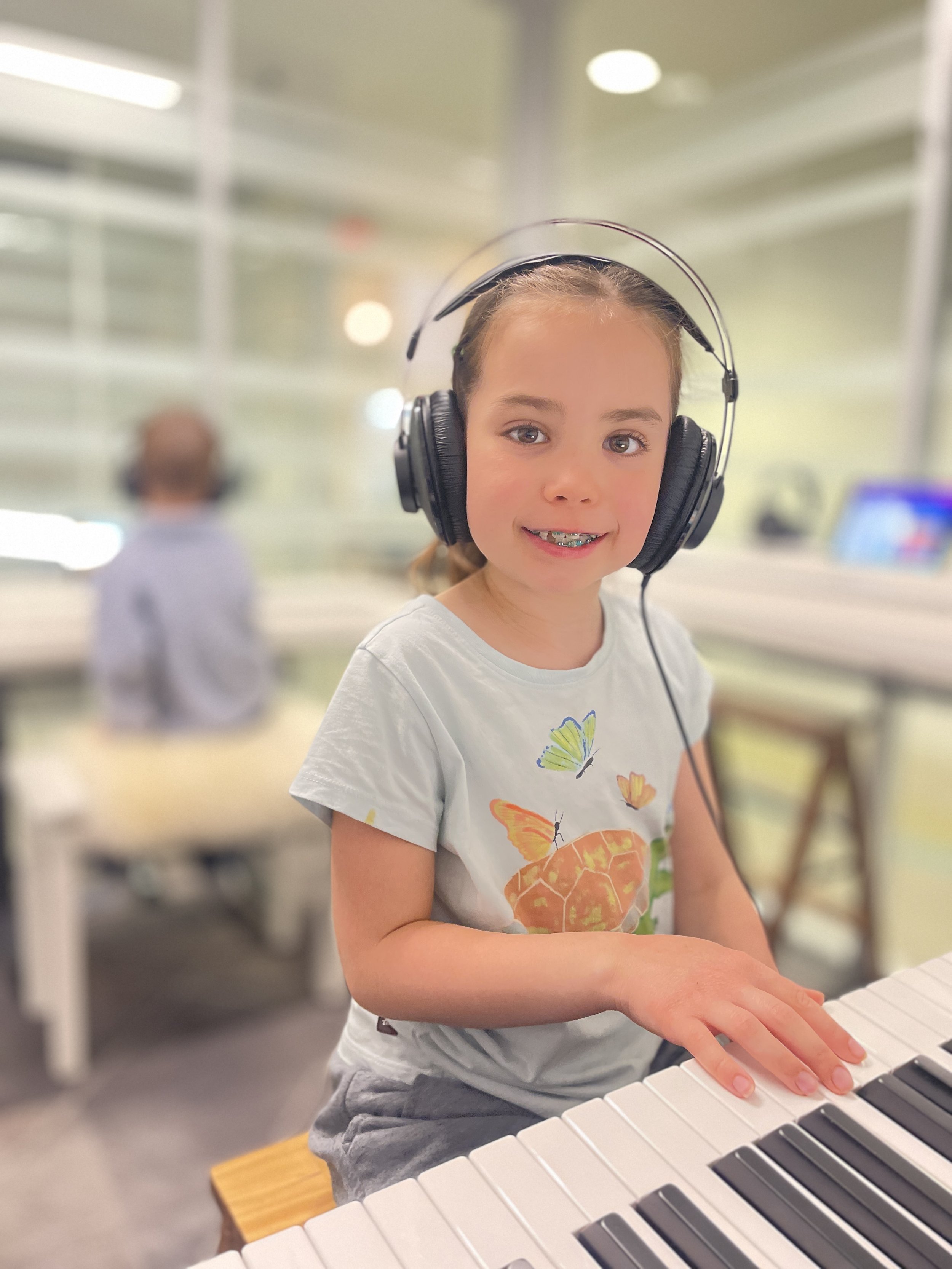
Headphones, especially for shared spaces
These details matter because they help the child develop habits that transfer more naturally to an acoustic piano.
Can a student learn rhythm, note reading, hand position, phrasing, dynamics, practice habits, and classical repertoire on a good digital piano?
Yes.
Will a digital piano feel exactly like a well-maintained acoustic piano?
No.
Both things can be true.
Technique Comes From Teaching, Not Furniture
One concern I sometimes hear is that digital pianos can encourage poor technique.
But technique does not come from the instrument alone.
Technique comes from how the student is taught to use their body: how they sit, how they balance, how they release unnecessary tension, how they coordinate the hand, arm, shoulder, back, breath, and attention.
A beautiful acoustic piano can still be played with strain.
A good digital piano can still be played with care, ease, and musical intention.
The point of correct technique is not to obey the furniture. It is to help the body organize itself so the student can play with freedom, safety, control, and expression.
That means we pay attention to how a child sits. We notice whether they are gripping, collapsing, reaching, forcing, or holding their breath. We help them learn that sound does not have to be squeezed out of the instrument. We teach them to listen, release, adjust, and try again.
This is true on an acoustic piano.
It is also true on a digital piano.
The instrument matters. But the quality of attention matters too.
When a Digital Piano Makes Sense
A digital piano can be a wonderful choice for a beginning student, especially when it allows a family to start sooner, practice more easily, and create a home setup that actually works.
Digital pianos can be especially practical for families who:
Are not ready to invest in an acoustic piano yet
Live in an apartment, townhouse, or shared-wall home
Need headphone practice options
Want something easier to move
Are still figuring out whether lessons will become long-term
Need a more budget-friendly starting point
Want a low-maintenance instrument that does not require tuning
This does not make the study less serious.
In fact, removing barriers can make the study more sustainable.
A child who has a comfortable, accessible instrument at home is more likely to sit down and play. And a child who sits down and plays is more likely to grow.
When an Acoustic Piano Might Be Worth Considering
As a student develops, an acoustic piano may become more valuable.
If your child is practicing daily, progressing into more advanced repertoire, preparing for auditions or exams, or becoming increasingly sensitive to tone and pedaling, it may be worth considering an acoustic piano.
But even then, the quality and condition of the instrument matter.
A poorly maintained acoustic piano with sticky keys, uneven action, or unstable tuning is not automatically better than a good digital piano. “Acoustic” is not a magic word. The instrument still needs to be playable, responsive, and cared for.
The goal is not to own the most impressive instrument.
The goal is to have an instrument that helps the student listen more closely, move more freely, and make more beautiful music.
What Beginners Actually Need at Home
For a young beginner, the best home setup is usually simple.
You do not need a formal music room. You do not need a grand piano. You do not need to redecorate your entire house around piano practice, though I will never object to a cozy lamp and a small ritual.
What your child needs is a place where playing the piano feels easy to begin.
That means the instrument is set up and ready. The bench is comfortable. The feet are supported. The music is nearby. The space feels inviting instead of chaotic.
A good home setup says: music belongs here.
For many children, that quiet message matters more than the brand of the instrument.
A Few Things We Recommend for a Home Piano Setup
If you are setting up a practice space at home, here are the basic categories I would prioritize.
A full-size weighted-key digital piano
Look for 88 keys, weighted or graded hammer action, and touch sensitivity. This gives beginning students a more piano-like experience and helps them develop habits that will transfer more easily to an acoustic piano later. For a budget friendly option for beginners we love the Yamaha p45. We even have one in the atelier.
An adjustable bench
The bench matters more than many parents realize. A child who is too low, too high, or wobbling on an unstable seat will have a harder time using their arms freely. This one from Liquid Stands is a great option.
Over-ear headphones
Headphones can make daily practice much more realistic in a busy household. They are especially helpful for apartments, townhouses, siblings doing homework, or parents trying to make dinner without hearing the same four measures seventeen times in a row. We use this pair from AKG. They are lightweight and comfortable with crystal clear sound quality.
A footrest or sturdy step stool
Dangling feet can make the whole body feel unstable. A footrest gives children a sense of grounding, which can help with posture, comfort, and control. This foam footrest has a little give to is and can provide a little softness that can make piano time feel a little cozier and more welcoming. And because one side is thicker and one side thinner it can grow with your pianist as their legs grow.
A small lamp or cozy corner detail
This is not technically necessary, but it helps. A practice space that feels warm and inviting is more likely to be used. I love the way this Black and White lamp looks like hand drawn staff lines just waiting for music notes to be written in.
Affiliate disclaimer: As an Amazon Associate, Obbligato Music may earn from qualifying purchases. We only recommend items we genuinely believe can support a more comfortable, musical home practice setup.