Persistence Begins With a Reason to Stay Curious
This post contains Amazon affiliate links. As an Amazon Associate, Obbligato Music may earn from qualifying purchases at no additional cost to you.
Every child eventually encounters something that does not work the first time.
A new piano piece may look confusing. The rhythm may keep slipping away. One hand may cooperate while the other seems to have plans of its own.
The ability to stay with that moment—to remain curious, try another approach, and keep going—is one of the most valuable things a child can learn through piano lessons.
The Benefit of Learning to Stay With a Challenge
Persistence is sometimes treated as though it simply means repeating something until it is correct.
But children are much more likely to keep working when they are genuinely engaged in the problem.
At the piano, a difficult passage is rarely solved through determination alone. A student may need to slow it down, tap the rhythm, play one hand at a time, listen more carefully, or notice a pattern that was not obvious before.
Each attempt has a purpose.
Over time, children begin to understand that difficulty is not necessarily a signal to stop. It may simply mean they have not found the right strategy yet.
That is a skill they can carry into reading, mathematics, sports, creative work, and all the other places where learning asks them to tolerate a little uncertainty.
The Hidden Benefit: Trusting Their Own Ability to Learn
The finished song is not always the most important result.
When children repeatedly experience themselves moving from confusion toward understanding, they begin to trust their own ability to figure things out.
They learn that making a mistake does not mean they are bad at piano.
They may need a smaller step.
They may need another explanation.
They may need to pause, listen, and try again.
Eventually, something that felt impossible begins to feel familiar.
That experience builds a quieter and more durable kind of confidence than simply being told, “You can do it.” The child has evidence. They have watched themselves do it.
How Piano Playground Turns the Work Into Play
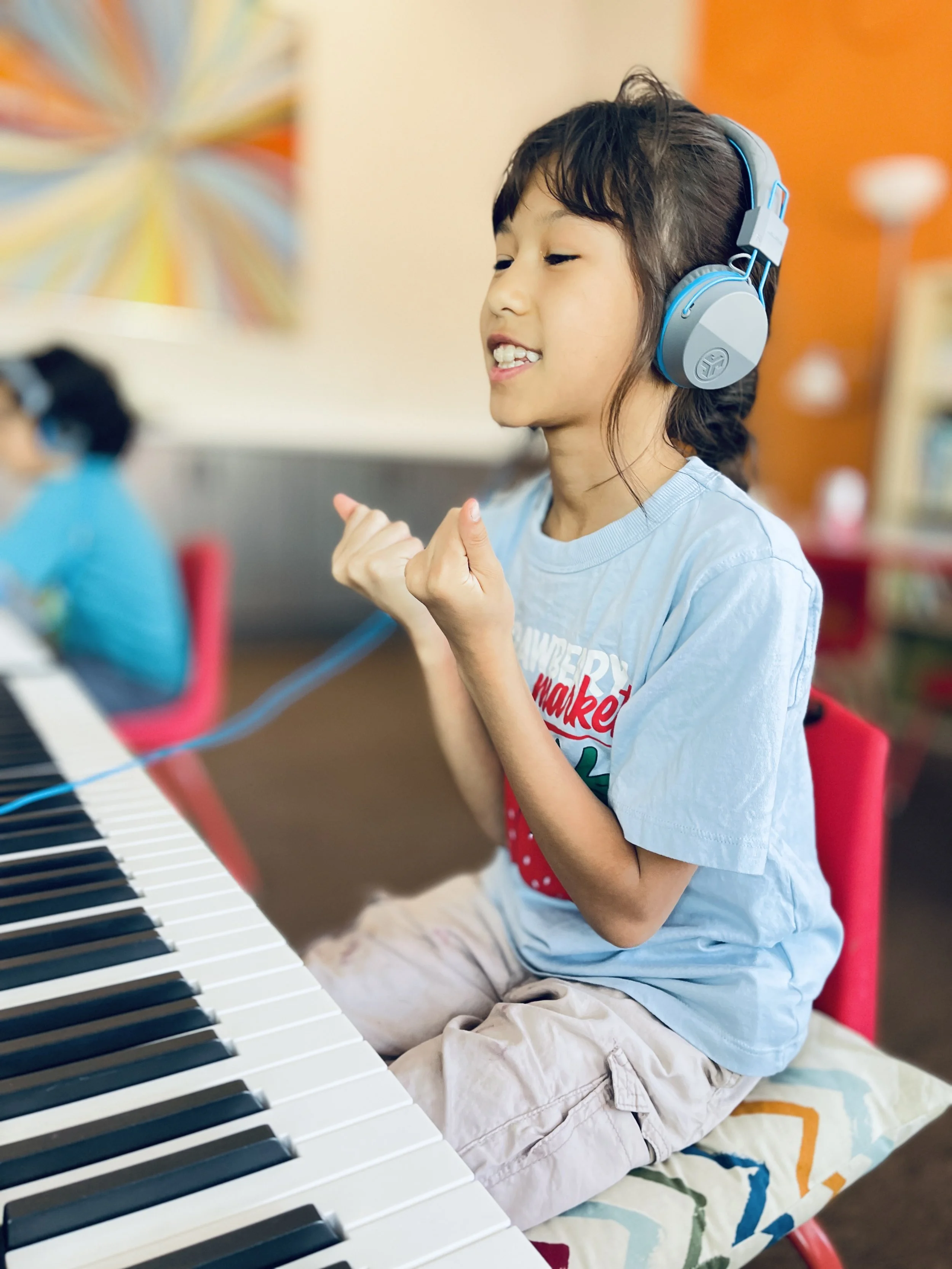
Piano Playground is built around short, varied musical challenges within a semi-private piano session.
A student may work toward playing a musical game with their friends, developing a new technique, starting a new song, mastering an old favorite, or returning to a difficult part after giving their brain and hands a brief change of focus.
Underneath the play, children are doing serious work.
They are concentrating.
They are repeating.
They are noticing mistakes.
They are making adjustments.
They are trying again.
But instead of experiencing that process as a long correction, they experience it as progress through a game, a musical challenge, or a problem they want to solve.
Play gives them a reason to stay.
“Piano Playground Is the Best Part of My Day”
Recently, two boys told me that Piano Playground was the best part of their day.
Of course, that made me happy. But I also thought about everything they had been doing during the session.
They had encountered unfamiliar music. They had repeated patterns. They had made mistakes, adjusted their playing, and tried again.
They were practicing how to remain engaged when something was not immediately easy.
But that was not how they experienced it.
To them, it felt like play.
That is exactly what I want Piano Playground to be: a place where children can do meaningful developmental work without losing the delight that made them curious about music in the first place.
A Simple Way to Make Repetition More Playful at Home
A large foam die can make repetition feel less like a demand and more like a small game.
Choose one short section of a song and roll the die to decide how many times to play it. Give each repetition a slightly different purpose:
Play once for accurate notes.
Play once for a steady rhythm.
Play once with expressive dynamics.
Play once as though performing for an audience.
The goal is not mindless repetition. It is helping children discover that every attempt can reveal or improve something new.
I love this colorful pair from Kawaii
Children’s Piano Lessons in Arlington and Potomac Shores
Piano Playground offers modern semi-private piano lessons for children in Arlington, Virginia, and Potomac Shores.
Through individualized instruction, purposeful technology, musical games, and creative challenges, children develop strong piano foundations while learning to approach difficult things with curiosity and confidence.
Schedule a complimentary Piano Playground session at www.obbligatomusic.com/complimentarysession and let your child discover how much serious learning can happen through play.
 Obbligato Music