
Why Music Is Necessary in a Child’s Life
Parents often ask the same thoughtful question when considering piano lessons for their child: What’s the best age to begin?
Before talking about ages or methods, it’s worth saying this: music is not an extracurricular.
Music helps children learn to listen, to notice, to regulate emotion, and to express what they don’t yet have words for. It builds attention, coordination, and confidence — but more than that, it creates a relationship with beauty and meaning that can last a lifetime. When piano lessons begin thoughtfully, they don’t just teach notes. They give children a way to be in the world.
If you’re exploring piano lessons for children in and around Arlington, Virginia, the question isn’t about starting as early as possible. It’s about choosing a moment when musical, physical, and emotional readiness come together.
Here’s what to know when deciding when — and how — to begin piano lessons.
Is There a “Perfect” Age to Start Piano?
There isn’t one universal age, but there is a range that works especially well for most children.
For many students, around age five is a sweet spot. At this stage, children are often ready to:
focus for short, structured periods of time
coordinate both hands independently
recognize simple patterns and symbols
follow multi-step directions
participate comfortably in a group setting
Starting when these skills are in place allows piano lessons to feel joyful and confidence-building rather than frustrating.
Why Starting Too Early Can Be Counterproductive
It’s tempting to think that earlier is always better, especially when children show interest in music. But piano is a physically and cognitively complex instrument.
Very young children may struggle with:
fine motor coordination
finger independence
sitting and listening for sustained moments
symbolic reading and pattern recognition
When lessons begin before a child is developmentally ready, progress can stall — not because the child lacks talent, but because the body and brain need more time to mature.
Waiting doesn’t mean missing out. It often means setting a child up for long-term success.
Readiness Matters More Than Age
Instead of focusing strictly on age, it’s more helpful to look for readiness cues, such as:
curiosity about sound and music
ability to play simple games with rules
willingness to explore rather than perform perfectly
comfort participating with peers
enjoyment of routine and repetition
When these qualities are present, children tend to thrive in early piano study.
Semi-Private vs Private Lessons for Children
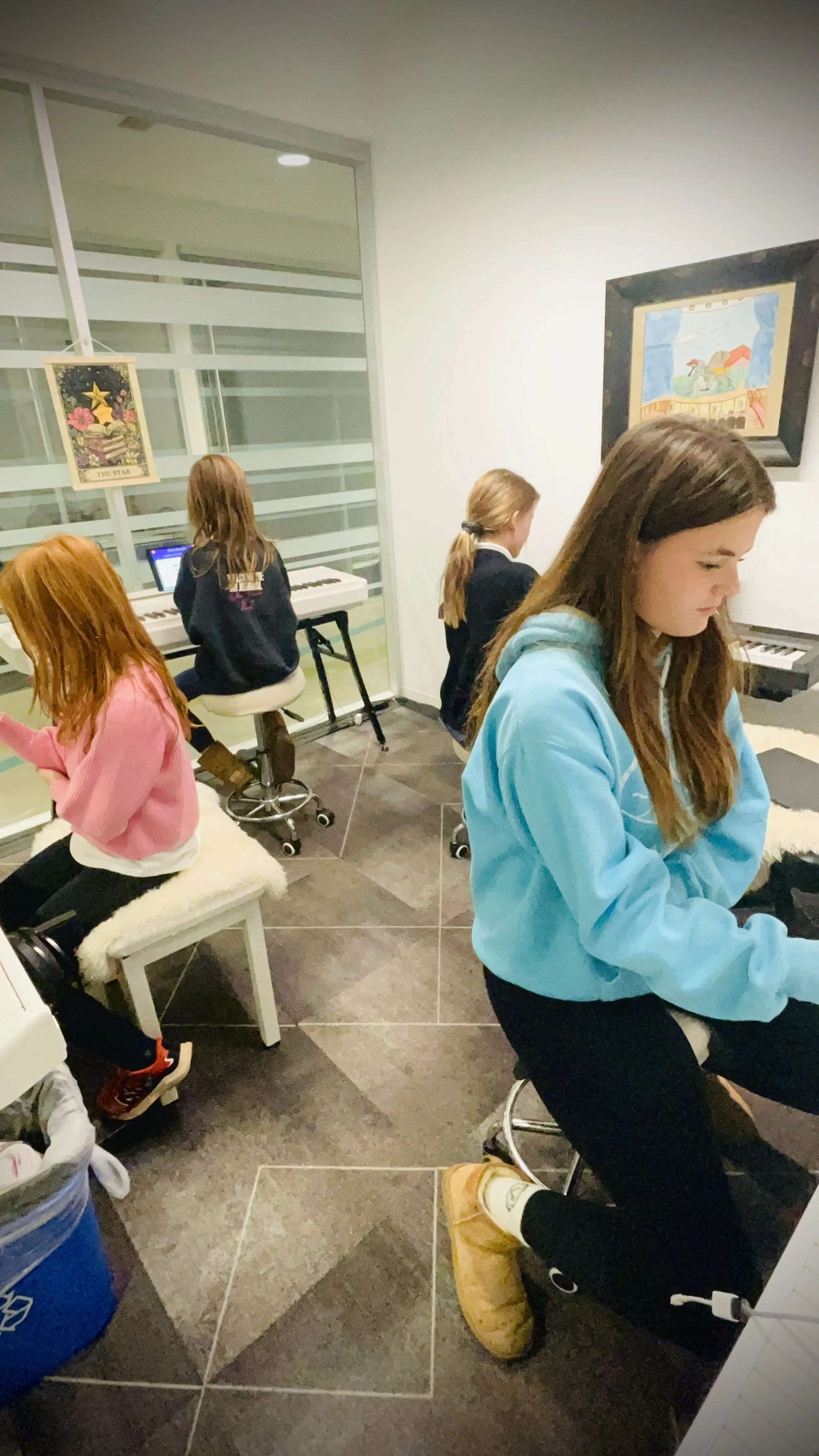
Many families assume private lessons are the only option, but small-private piano lessons can be especially effective for young beginners.
In a thoughtfully structured group setting, children benefit from:
learning through listening and imitation
shared musical play
reduced performance pressure
social motivation and encouragement
Sessions along side peers allow children to absorb musical ideas naturally, much like language — through exposure, repetition, and play.
Private lessons can be a wonderful fit later, once a child has developed foundational skills and a clearer sense of personal goals.
What Early Piano Lessons Should Focus On
At the beginning stages, piano lessons for children should emphasize:
ease and comfort at the instrument
healthy coordination and movement
listening skills
rhythm and pattern recognition
creative exploration
The goal isn’t speed or achievement. It’s building a positive relationship with music that supports confidence and curiosity.
Age Range and Program Fit
While every child develops at their own pace, having clear age ranges helps families know what to expect.
At our studio, Piano Playground is designed for children ages 5–15 who are ready to engage with music through listening, movement, shared play, and gradually increasing independence at the piano.
Beginning around age five allows children to participate fully — physically, cognitively, and socially — in a way that supports confidence and long-term enjoyment of music. As students grow, the structure of lessons evolves with them, meeting their changing needs while keeping music at the center.
What Kind of Piano Does a Child Need at Home?
Families often worry they need a large or expensive instrument right away. In reality, most beginners do very well with:
a digital piano with weighted keys
a setup that fits comfortably in the home
consistent access for short, regular play
The instrument should support exploration, not create pressure.
Choosing Piano Lessons That Fit Your Child
The right piano program for children is one that:
respects developmental stages
prioritizes musical enjoyment
creates a sense of belonging
encourages steady, pressure-free growth
When lessons are aligned with how children naturally learn, progress follows — often more smoothly than expected.
A Thoughtful Beginning
Starting piano lessons is less about finding the earliest age and more about finding the right moment.
When children begin at a time that supports their physical, emotional, and musical development, piano becomes something they look forward to — not something they’re pushed through.
That kind of beginning makes all the difference.