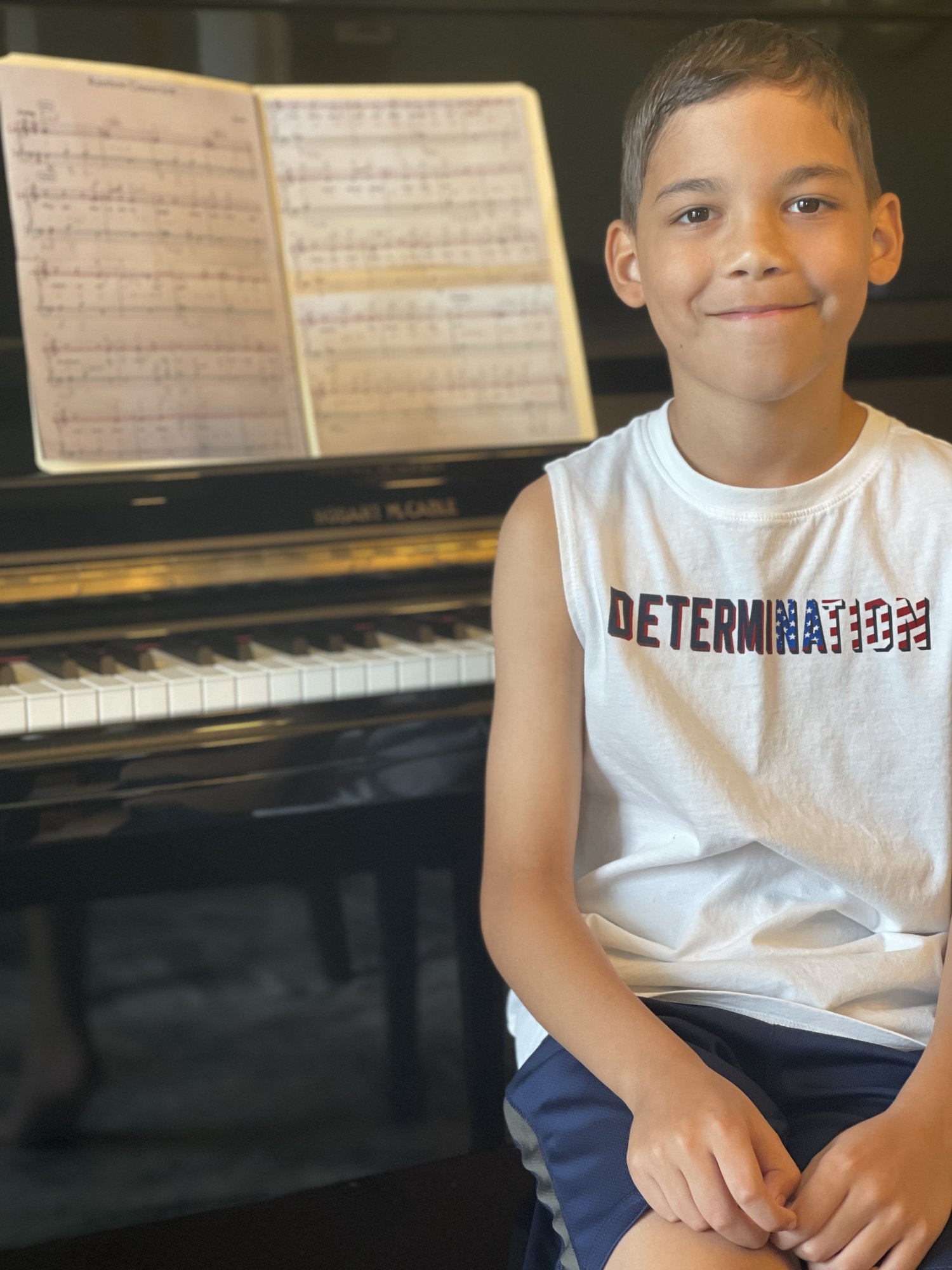
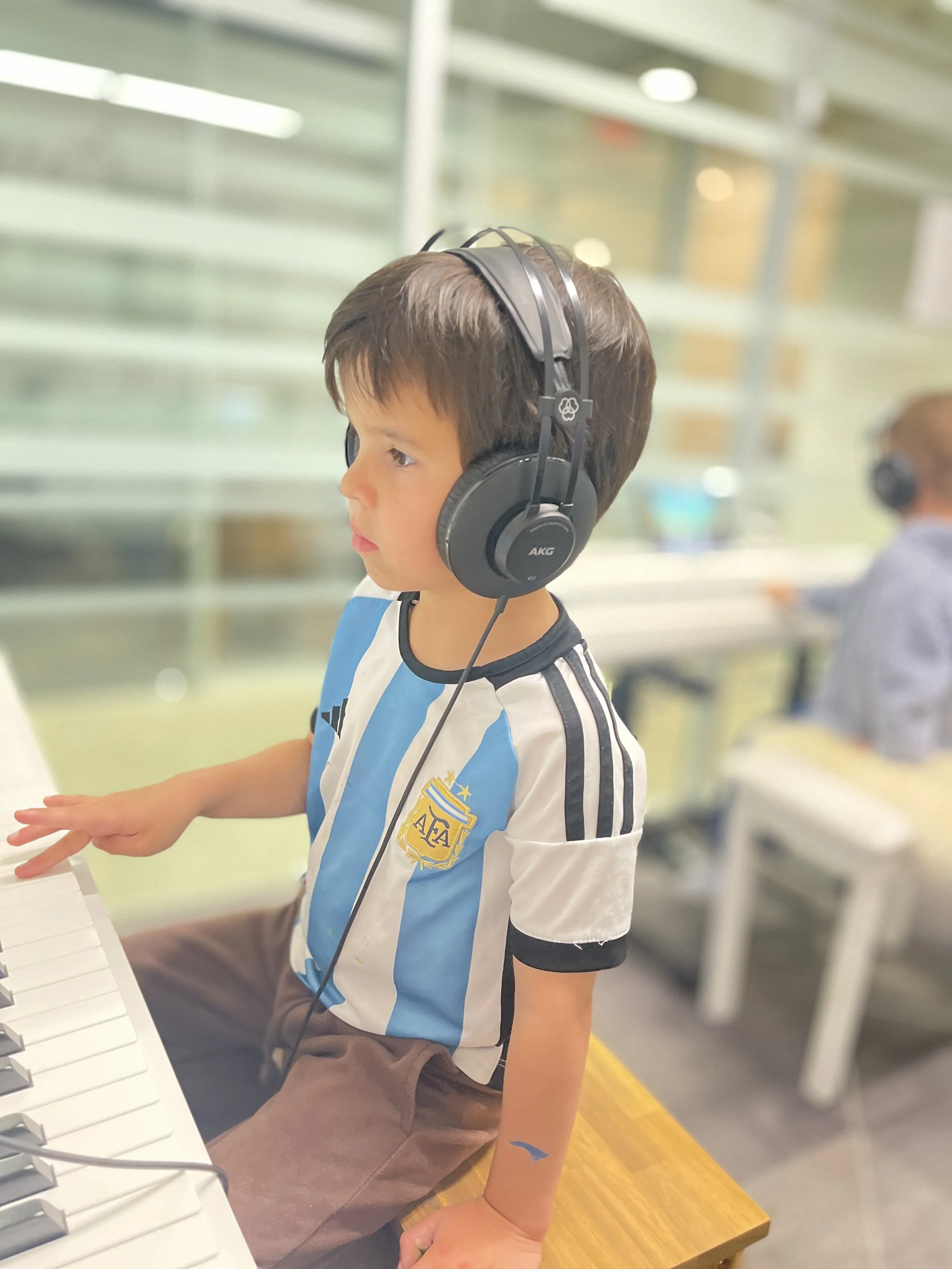
A simple guide for parents who want home practice to feel easier, calmer, and more comfortable.
If you have ever watched your child practice piano at home and thought, “Is that how they’re supposed to sit?” you are not alone.
Parents notice the shoulders creeping up. The feet dangling. The back curling. The bench wobbling. The hands collapsing dramatically like tiny theatrical swans.
And because piano lessons can feel mysterious from the outside, it is easy to wonder whether posture is something you are supposed to correct every five seconds.
The good news: your child does not need to look stiff, formal, or frozen at the piano.
In fact, we do not want that.
At Obbligato Music, we think about piano posture less as “sit up straight” and more as: Can the body move freely? Can the arms reach comfortably? Can the spine stay lively? Can the child feel supported enough to focus on the music?
Because the goal is not perfect posture.
The goal is ease.
Why Piano Posture Matters for Kids
Good piano posture helps children play with more freedom, more control, and less strain.
When a child is too low, too high, too far away, or unsupported, everything becomes harder. The shoulders may lift. The wrists may collapse. The fingers may grip. The back may round. The child may start to feel tired or frustrated before they have even really begun.
A better setup does not magically create a pianist overnight.
But it does remove unnecessary friction.
And for beginners especially, removing friction matters. Children are already learning notes, rhythms, patterns, finger numbers, listening skills, coordination, and how to keep going when something is tricky. They do not need their furniture working against them too.
What “Good Posture” Actually Looks Like
A comfortable piano setup usually includes a few simple things:
The child can sit near the front half of the bench.
The feet are supported, either on the floor or on a footrest.
The arms can hang freely from the shoulders.
The elbows are roughly level with the keys, not dramatically above or below them.
The wrists are not collapsed downward or held stiffly upward.
The child can move, breathe, and shift slightly without losing balance.
That last part is important.
Children are not statues. Pianists are not statues either. Beautiful playing requires movement. The spine, ribs, collarbones, shoulders, arms, wrists, hands, and fingers all participate.
A child who is “sitting up straight” but holding everything tightly is not actually better organized than a child who is gently moving, balancing, and responding to the music.
The Foot Problem
One of the biggest issues for young beginners is feet.
If a child’s feet are dangling, the body has to compensate somewhere. Often that means gripping the bench, tightening the legs, rounding the back, or leaning into the hands.
That does not mean every family needs a fancy pedal extender immediately. But it does mean that some kind of foot support can be incredibly helpful.
A sturdy stool, aerobic step, yoga block, or adjustable footrest can make home practice feel more grounded almost instantly.
When the feet have somewhere to land, the whole body often settles.
The Bench Problem
The second big issue is bench height.
Many children practice on whatever chair is nearby. Dining chairs, office chairs, folding chairs, and piano benches that are too tall or too low can all create problems.
An adjustable bench is one of the most useful upgrades for a home piano space because it helps the child meet the instrument at a better height.
This is especially true if multiple people use the same piano: a child, a parent, a sibling, or an adult beginner.
The goal is not to make the setup precious.
The goal is to make it workable.
The “Sit Up Straight” Trap
Parents often say “sit up straight” because they are trying to help. I understand the instinct completely.
But many children hear “sit up straight” and respond by becoming rigid. They lift the chest, tighten the shoulders, lock the back, and suddenly piano feels like a military exercise with quarter notes.
A better cue might be:
Can your head float up?
Can your feet feel steady?
Can your shoulders be soft?
Can your arms hang like they are heavy?
Can your back move when you breathe?
These cues invite awareness instead of force.
And awareness is much more useful at the piano.
Why Music Is Necessary
This is one of the reasons music study matters so much for children.
Piano lessons are not only about learning songs. They are also about learning how to pay attention.
A child at the piano is learning to notice sound, movement, balance, pattern, timing, effort, and ease. They are learning how small adjustments change the result. They are learning that the body is not separate from the mind.
That is powerful.
In a world that often asks children to rush, perform, and consume, music asks them to listen.
It asks them to come back to themselves.
And sometimes that begins with something as simple as noticing where their feet are.
Tools That Help the Body Get Ready to Play
Affiliate Disclosure:
This post contains affiliate links. As an Amazon Associate, Obbligato Music may earn from qualifying purchases at no additional cost to you. We only recommend tools that support a more comfortable, thoughtful, and musical home practice environment.