
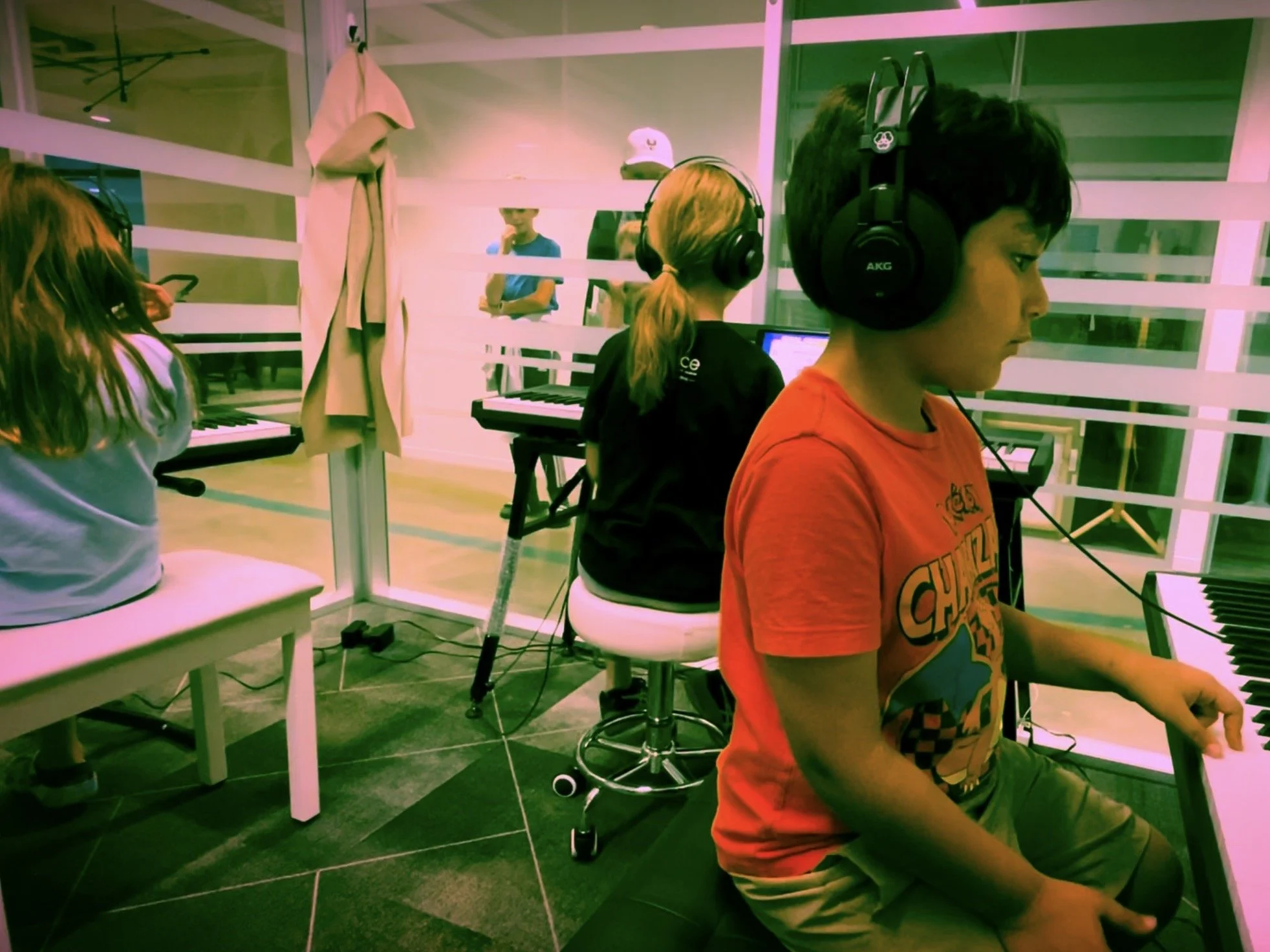
Music is Not an Extracurricular
It is a way children learn to focus, regulate emotion, build confidence, and experience beauty.
In a world that moves fast and pulls attention in a hundred directions, piano offers something rare: sustained concentration, listening, patience, and creative expression. Many Arlington parents are looking for activities that build more than just résumés — something that strengthens focus, confidence, and long-term growth. If you’ve ever questioned whether music lessons are truly worth the investment, I wrote about why music lessons are a gift that lasts longer than toys, and why the benefits compound over time.But timing matters.
As a teacher offering piano lessons in Arlington, VA, I’m often asked:
“Is my child ready yet?”
Here’s what to look for.
The Sweet Spot: Why We Start at Age 5
At Obbligato Music’s Piano Playground (for ages 5–15), we begin formal instruction at five.
Why not four?
Because around age five, something important begins to click.
Fine motor coordination strengthens.
Pre-reading skills emerge.
Social-emotional regulation expands.
Attention span stretches just enough to hold structure.
At four, children are wonderful. They are curious and bright. But piano asks for a blend of skills that typically come together more clearly at five.
Starting at the right time sets a child up for success instead of frustration.
5 Signs Your Child May Be Ready for Piano Lessons
If you’re considering piano lessons in Arlington, here are some strong indicators:
1. They Can Follow 2–3 Step Directions
“Let your back be long and strong. Place finger one on the C key. Listen.”
Piano requires layered listening and responding. If your child can follow simple multi-step directions, they’re building the cognitive framework needed for music study.
2. They’re Curious About Sound
Do they tap rhythms on the table?
Ask how instruments work?
Press keys and experiment?
Curiosity is more important than talent.
3. They Can Sit and Focus for 10–15 Minutes
Not perfectly. Not silently.
But with some structure.
That’s enough to begin.
Creating a calm practice space helps enormously. If you’re setting up at home, here’s how to create a cozy music corner at home that supports focus and independence.
4. They’re Beginning to Recognize Letters or Patterns
Reading music is pattern recognition. Early literacy skills make this process smoother and more joyful.
5. They Want To
This one matters most.
External pressure fades quickly. Internal interest builds momentum.
Starting at ages 6, 7, 8, and beyond? You’re Not Behind.
Many families in Arlington don’t begin at five — and that’s completely fine.
In fact, children who start at six, seven, eight and beyond often progress quickly because:
• Their reading skills are stronger
• Their hands are larger
• Their attention span is longer
• Their independence is growing
Piano is not a race. It’s a layered skill.
What matters most is readiness — not comparison.
In our semi-private sessions, beginners of all starting ages work at their own pace. No one is “behind.” Everyone is building.
What Piano Lessons Should Feel Like
If you’re searching for piano lessons in Arlington, you’ll find many formats:
Private one-on-one
Large group classes
Online programs
At Obbligato Music, we offer semi-private piano lessons in Arlington — individualized repertoire within a small peer group.
Children receive personal attention, but they also:
• Listen to each other
• Learn with each other and from each other
• Develop confidence sharing their songs in a low-pressure, peer supported environment
It combines the focus of a private lesson with the social support of a group — and that combination often leads to longer retention and stronger musical identity.
“But What If They’re Not Ready?”
Waiting six months is not failure.
It’s wisdom.
Children who start when development aligns with instruction tend to:
• Practice more willingly
• Experience fewer power struggles
• Progress more steadily
• Enjoy music longer
In Arlington’s achievement-focused culture, earlier can feel better.
But better is better.
Piano Is More Than Notes
When a child learns piano, they are learning:
Delayed gratification
Frustration tolerance
Auditory discrimination
Fine motor control
Memory sequencing
Confidence through repetition
These skills transfer to school, sports, friendships, and future work.
Music is not an add-on.
It’s foundational.
Ready to Explore Piano Lessons in Arlington?
If you’re in Arlington, VA and wondering whether now is the right time, we offer complimentary introductory visits for families considering Piano Playground (ages 5–15).
It’s a calm way to:
• Meet the space
• Experience the rhythm of a session
• See how your child responds
Sometimes the answer becomes clear when they sit at the piano.